Top 12 Selenium Alternatives for Web Testing in 2026
Discover the top 12 selenium alternatives for modern web testing. Compare open-source, cloud, and AI tools to find the right fit for your QA team.
Automate and scale manual testing with AI ->
For decades, Selenium has been the bedrock of web automation, a powerful and flexible tool that defined an era of browser testing. However, the pressures of modern software development, characterized by rapid release cycles and complex front-end frameworks, have exposed its limitations. Teams now contend with brittle tests, complex setup procedures, and a steep learning curve that can slow down agile workflows. Consequently, a new generation of Selenium alternatives has emerged, designed from the ground up to address these very challenges.
Modern QA teams, much like hardware engineers, are constantly refining their approaches to understand how to test for maximum reliability in their applications. This shift has driven the adoption of tools that offer faster execution, more stable element locators, and built-in features like automatic waiting and video recording, which were once cumbersome add-ons in the Selenium ecosystem. The goal is no longer just to automate clicks and assertions; it’s about building a robust, maintainable, and scalable testing strategy that integrates seamlessly into the CI/CD pipeline.
This guide is your comprehensive resource for navigating this new landscape. We will dissect 12 of the most prominent Selenium alternatives, from open-source powerhouses like Playwright and Cypress to intelligent, low-code platforms like TestDriver and mabl. For each tool, you will find a detailed analysis of its core features, ideal use cases, language and browser support, and key limitations. We provide direct links and screenshots to help you evaluate which solution best fits your team’s specific needs, technical skills, and long-term goals. Forget sifting through marketing copy; this is a practical comparison for engineers looking to elevate their testing framework.
1. TestDriver
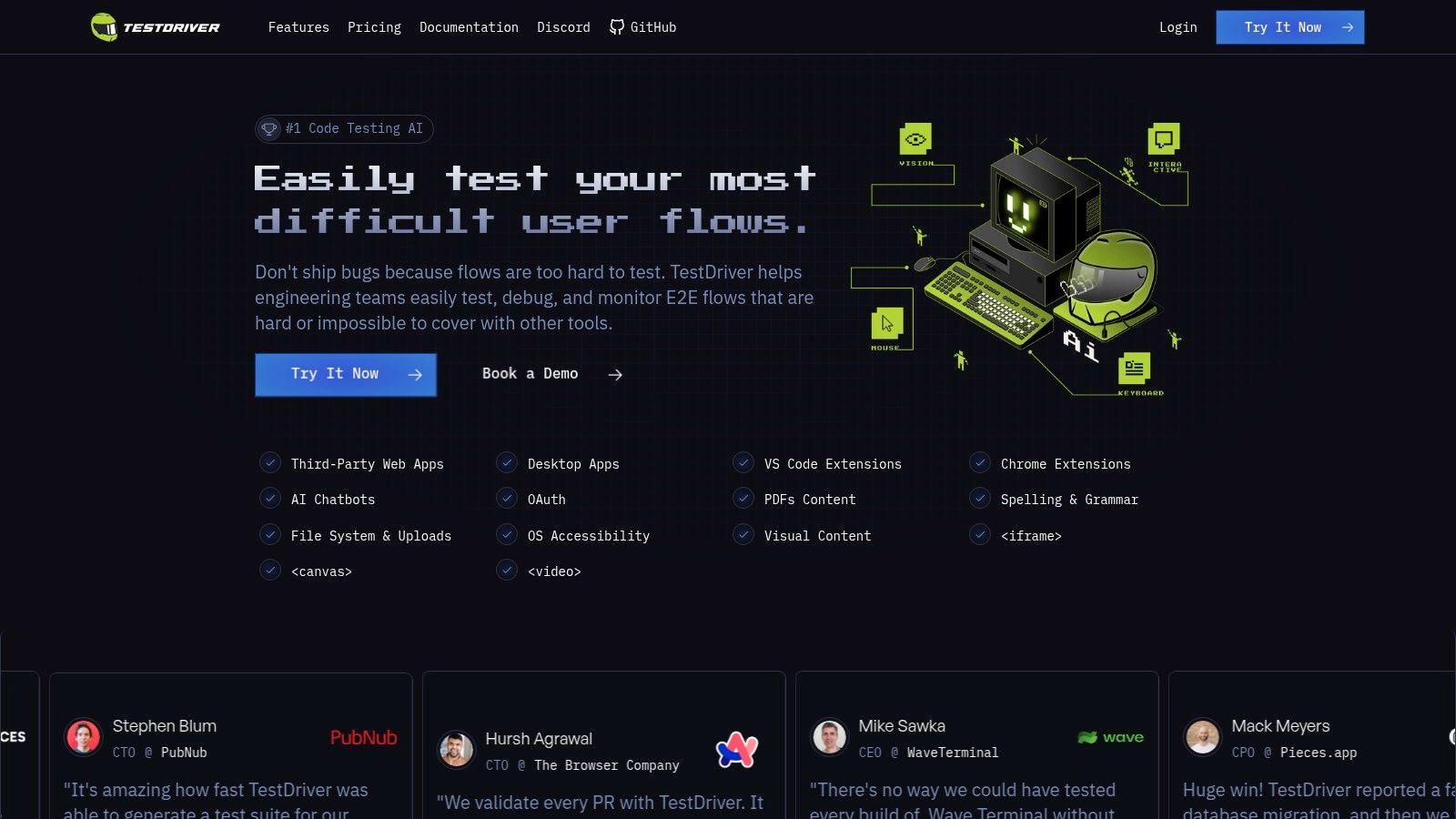
TestDriver emerges as a powerful, AI-driven selenium alternative designed to dramatically accelerate end-to-end testing for modern web and desktop applications. Instead of relying on brittle, selector-based scripts, it leverages an AI QA agent that understands plain-English instructions to interact with an application’s UI. This vision-based approach allows it to execute tests like a real user would, adapting to interface changes that would typically break a traditional Selenium suite. This makes it an exceptional choice for teams prioritizing speed, stability, and reduced maintenance overhead.
The platform’s core strength lies in its ability to translate user intent directly into executable tests. Engineering teams can generate a comprehensive E2E test suite in minutes simply by providing a high-level prompt. This significantly lowers the barrier to entry for test automation, empowering developers and QA engineers alike to build robust regression protection without deep scripting expertise.
Key Features and Use Cases
TestDriver stands out with its focus on practical, developer-centric features that address common pain points in the testing lifecycle.
- AI-Powered Test Generation: Generate tests from simple prompts or programmatically via a Vitest plugin. This is ideal for agile teams needing to validate new features quickly or for validating every pull request with comprehensive E2E coverage.
- Deep Observability: Each test run includes a “Dashcam” video replay, detailed logs, network traces, and performance metrics (CPU/memory). This comprehensive reporting simplifies debugging, making it faster to identify the root cause of failures.
- Cross-Platform Capabilities: TestDriver is not limited to web browsers. It can automate interactions with desktop apps, PDFs, file uploads, and even chatbots, offering a unified solution for complex user workflows.
- CI/CD Integration: With support for JUnit XML reports and seamless integration into popular CI pipelines, it fits directly into existing development workflows. The platform also offers VS Code and Chrome extensions to further streamline test creation and management.
Practical Implementation and Pricing
Getting started with TestDriver is straightforward. The platform offers a free tier (no credit card required), allowing teams to explore its capabilities immediately. Its public GitHub repository contains extensive examples, and an active Discord community provides support.
While the free tier is generous, teams planning large-scale implementation should consult the website for detailed pricing on paid plans. Early adopters like The Browser Company and PubNub praise its rapid bug detection and low maintenance, underscoring its value for teams that need to iterate quickly without sacrificing quality.
Website: https://testdriver.ai
2. Playwright (Microsoft)
Backed by Microsoft, Playwright has rapidly emerged as a powerful open-source framework and one of the leading Selenium alternatives for modern, end-to-end web testing. It enables teams to write reliable tests that run across all major browsers (Chromium, Firefox, WebKit) using a single, consistent API. Its architecture is designed to handle the complexities of modern web applications, providing a more stable and less flaky testing experience.
Playwright’s standout feature is its auto-waiting mechanism, which intelligently waits for elements to be ready before performing actions, drastically reducing common sources of test failure. Combined with its robust tracing capabilities, which generate detailed reports, screenshots, and videos, debugging becomes significantly faster and more intuitive. While it’s a code-first framework, its built-in Codegen tool helps accelerate script creation by recording user actions. For teams deciding between modern frameworks, understanding the specific differences is key; you can explore a detailed comparison in this guide on Playwright vs. Cypress to see which fits your workflow best.
Key Details & Considerations
- Best For: Teams that need a reliable, code-first framework for cross-browser testing of dynamic web applications.
- Languages: JavaScript, TypeScript, Python, Java, .NET.
- Core Strengths: Exceptional auto-waiting reduces flakiness, comprehensive debugging tools, and unified API for all major browsers.
- Limitations: Lacks a built-in low-code interface beyond Codegen and requires integrating with a separate cloud provider for large-scale, parallel device testing.
- Pricing: Free and open-source.
Website: https://playwright.dev
3. Cypress
A favorite among front-end developers, Cypress is an open-source, JavaScript-based framework designed for modern web application testing. Unlike Selenium, which executes remote commands across the network, Cypress runs directly inside the browser, giving it a unique architecture that offers faster, more consistent, and more reliable test execution. This approach makes it one of the most popular Selenium alternatives for teams working within the JavaScript and TypeScript ecosystems.
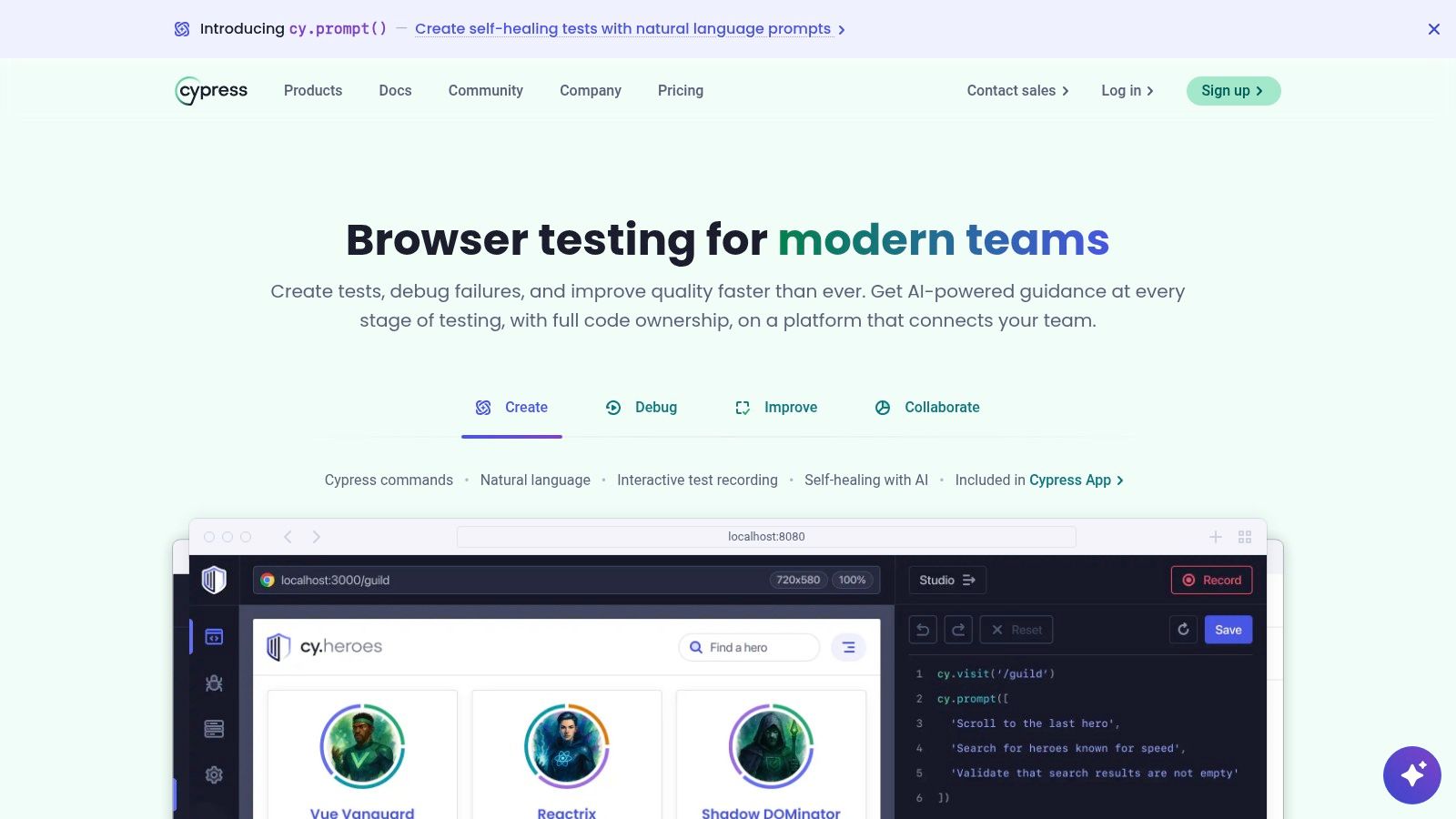
Cypress is renowned for its exceptional developer experience, featuring an interactive Test Runner that provides time-travel debugging and real-time reloads as you code. This makes writing and debugging end-to-end, integration, and unit tests a more intuitive process. While the open-source tool is powerful on its own, its commercial offering, Cypress Cloud, enhances team collaboration with parallelization, flake detection, analytics, and AI-assisted debugging. Its large community and extensive documentation provide a rich ecosystem for developers looking to integrate testing seamlessly into their CI/CD pipelines.
Key Details & Considerations
- Best For: Front-end development teams using the JavaScript/TypeScript ecosystem who prioritize a superior developer experience and fast feedback loops.
- Languages: Primarily JavaScript and TypeScript.
- Core Strengths: Excellent developer experience with time-travel debugging, fast test execution due to its in-browser architecture, and a strong community.
- Limitations: Primarily focused on the JS/TS ecosystem with limited cross-language support. Its browser support model is less comprehensive than WebDriver-based tools.
- Pricing: The test runner is free and open-source. Cypress Cloud offers a free tier, with paid plans for additional parallelization, test analytics, and team features.
Website: https://www.cypress.io
4. Puppeteer
Developed by Google, Puppeteer is a Node.js library that provides a high-level API to control Chrome or Chromium over the DevTools Protocol. While not a full-fledged testing framework out of the box, it is one of the most powerful Selenium alternatives for tasks requiring direct, programmatic browser automation. It excels in headless environments, making it ideal for web scraping, generating PDFs, taking screenshots, and running lightweight end-to-end tests within a CI/CD pipeline. Its direct control over the browser engine offers a stable and fast automation experience.
Puppeteer’s strength lies in its simplicity and focus. Unlike comprehensive frameworks, it provides the core building blocks for browser interaction, giving developers the flexibility to integrate it with their preferred testing runners like Jest or Mocha. This makes it a great choice for teams that already have a JavaScript-based testing ecosystem and need to add browser automation capabilities. Its API is intuitive for tasks like network interception, performance tracing, and manipulating browser sessions, going beyond what many traditional testing tools can easily accomplish.
Key Details & Considerations
- Best For: Developers and QA engineers needing a lightweight, code-centric tool for browser automation, scraping, and headless testing in a Node.js environment.
- Languages: JavaScript, TypeScript.
- Core Strengths: Fast and reliable headless execution, direct control via DevTools Protocol, and excellent for non-UI testing tasks like PDF generation and performance tracing.
- Limitations: Lacks a built-in test runner and assertion library, requiring integration with other tools for a complete testing solution. Cross-browser support is more limited compared to Playwright.
- Pricing: Free and open-source.
Website: https://pptr.dev/
5. WebdriverIO
WebdriverIO is a highly versatile, open-source automation framework for Node.js that stands out as one of the most flexible Selenium alternatives. It provides a unique advantage by supporting both the WebDriver protocol (like Selenium) and the Chrome DevTools protocol, giving teams the choice between broad cross-browser compatibility and deep, Chromium-specific debugging capabilities. Its mature ecosystem is built around a powerful test runner and a rich collection of community-backed plugins and services, making it a robust choice for end-to-end, component, and mobile application testing.
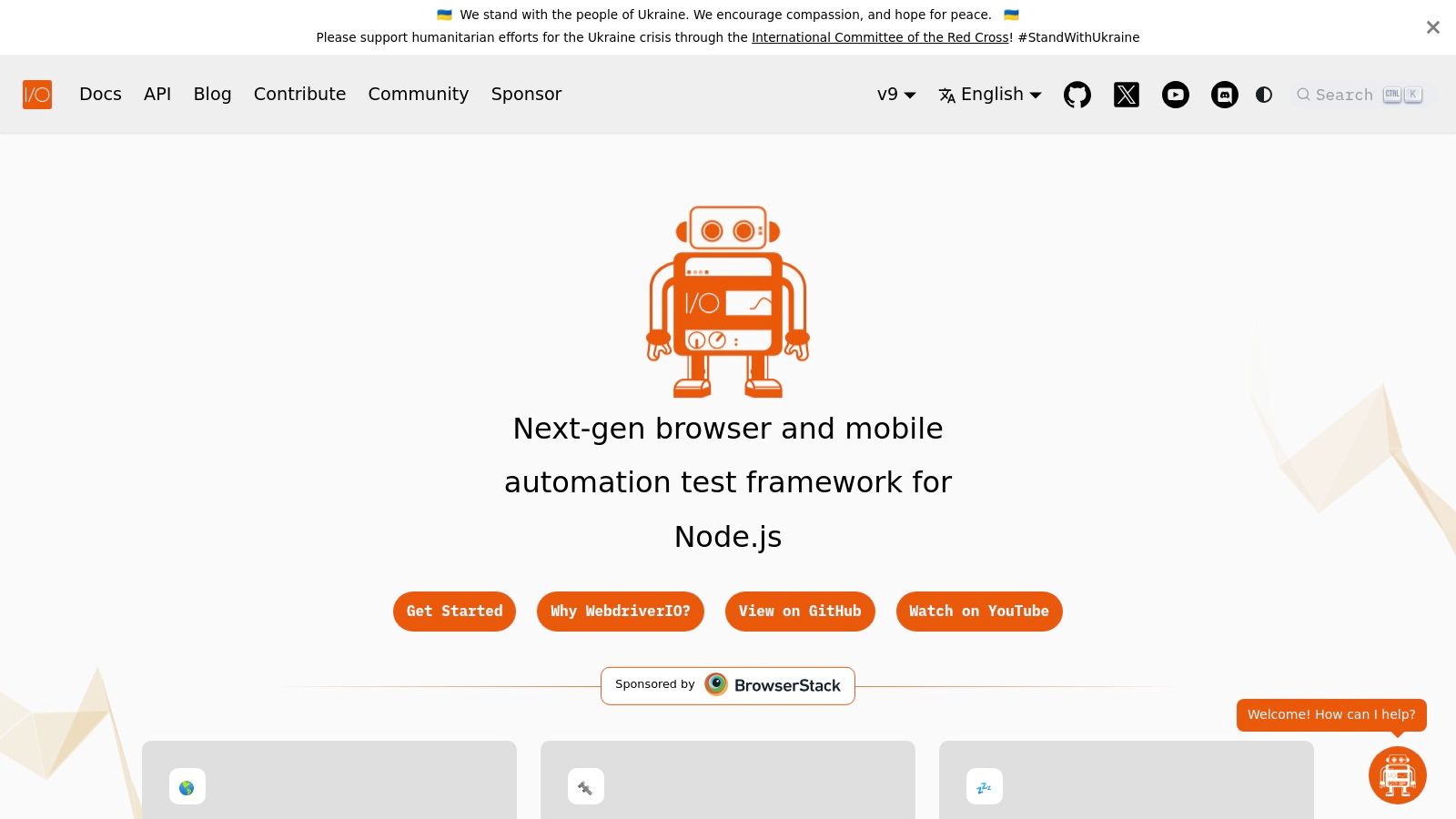
The framework’s core strength lies in its configurability and extensibility. A command-line interface wizard simplifies initial setup, allowing you to quickly scaffold a project with your preferred reporters, services, and framework integrations (like Mocha, Jasmine, or Cucumber). This plugin-based architecture allows for seamless integration with tools for visual regression, performance analysis via Lighthouse, and more. While WebdriverIO offers immense flexibility, it’s worth exploring other options; for a deeper dive, you can see how it stacks up against the competition in this guide to the top alternatives to WebdriverIO for E2E UI testing.
Key Details & Considerations
- Best For: JavaScript/TypeScript teams looking for a highly extensible framework that supports both WebDriver and DevTools protocols.
- Languages: JavaScript, TypeScript.
- Core Strengths: Dual protocol support (WebDriver and DevTools), a mature plugin ecosystem for high customization, and a unified runner for web and mobile.
- Limitations: Primarily focused on the JavaScript ecosystem. Its extensive configuration options and plugin management can introduce complexity for new teams.
- Pricing: Free and open-source.
Website: https://webdriver.io/
6. TestCafe Studio (DevExpress)
For teams seeking a commercially supported, low-code entry point into test automation, TestCafe Studio by DevExpress offers a compelling package. Built upon the open-source TestCafe framework, it provides a comprehensive desktop IDE designed to simplify the entire testing lifecycle. As a dedicated Selenium alternative, its core strength lies in its WebDriver-free architecture, which injects test scripts directly into the browser, resulting in more stable and faster test execution.
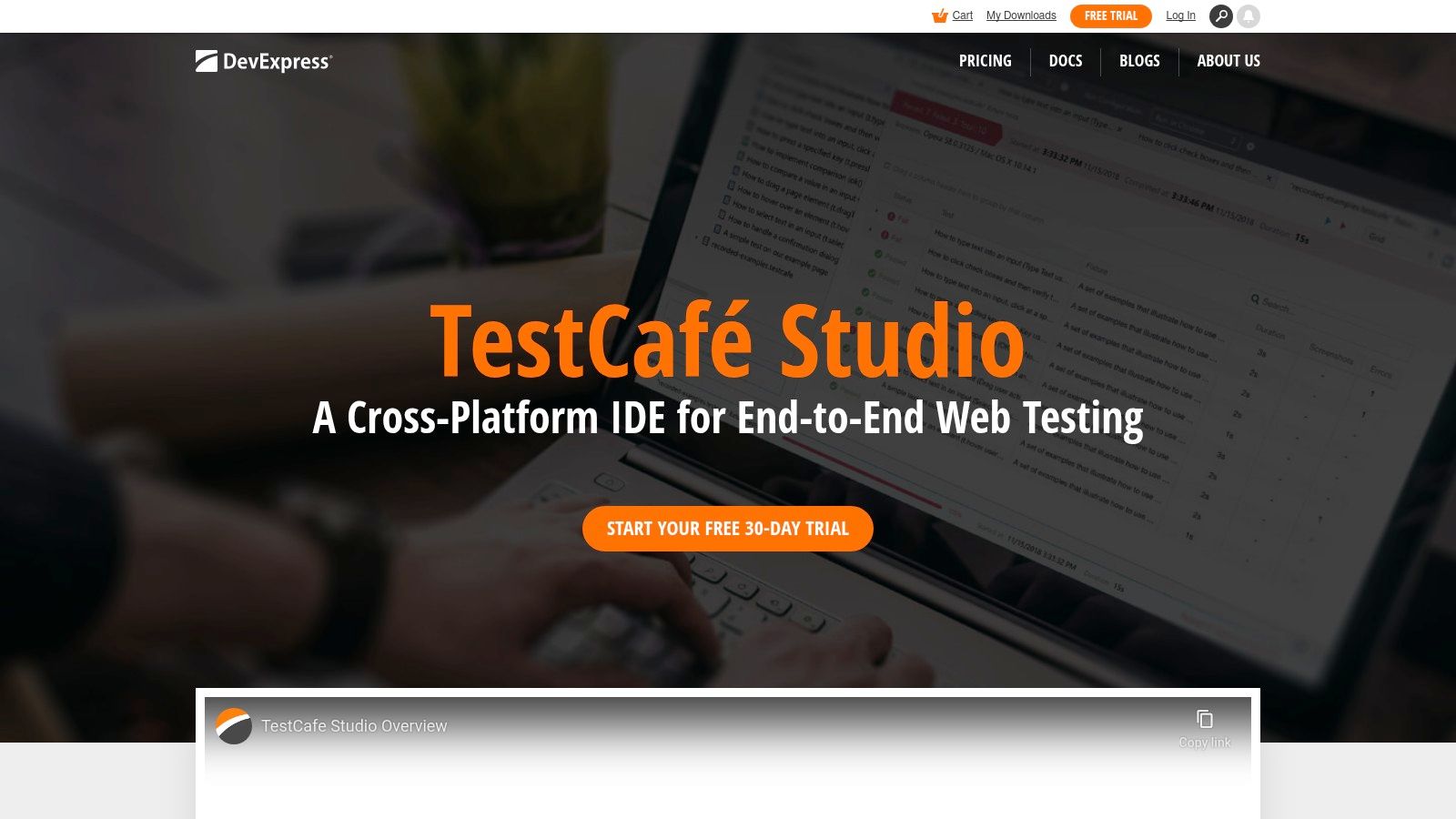
The platform is particularly attractive for its powerful visual test recorder, which allows users to generate complex test scripts simply by interacting with the application. These recorded steps can then be edited, reordered, and extended with custom code within the integrated editor, offering a smooth transition from no-code to code-heavy testing. This hybrid approach enables manual QA testers to contribute to automation efforts while giving developers the flexibility they need. Unlike purely open-source tools, TestCafe Studio is backed by professional support from DevExpress, making it a reliable choice for enterprise environments where dedicated assistance is crucial.
Key Details & Considerations
- Best For: Teams that want a supported, on-premise IDE with a strong low-code recorder and the ability to extend tests with JavaScript.
- Languages: JavaScript, TypeScript.
- Core Strengths: WebDriver-free architecture improves test stability, an intuitive visual recorder accelerates script creation, and commercial support is available.
- Limitations: It’s a paid commercial product, which may not suit teams looking for fully free tools. The community and plugin ecosystem are smaller compared to giants like Playwright or Cypress.
- Pricing: Paid commercial license with different tiers available; includes one year of updates and optional support.
Website: https://www.devexpress.com/products/testcafestudio/
7. Katalon
Katalon positions itself as an all-in-one test automation platform, offering a comprehensive and integrated environment that serves as one of the most complete Selenium alternatives. It bundles a versatile IDE (Katalon Studio), cloud-based test execution (TestCloud), and extensive reporting capabilities into a single solution. This approach is designed to support teams across web, API, mobile, and even desktop testing, providing a unified toolset that can handle diverse quality assurance needs without requiring extensive integration of separate libraries and frameworks.
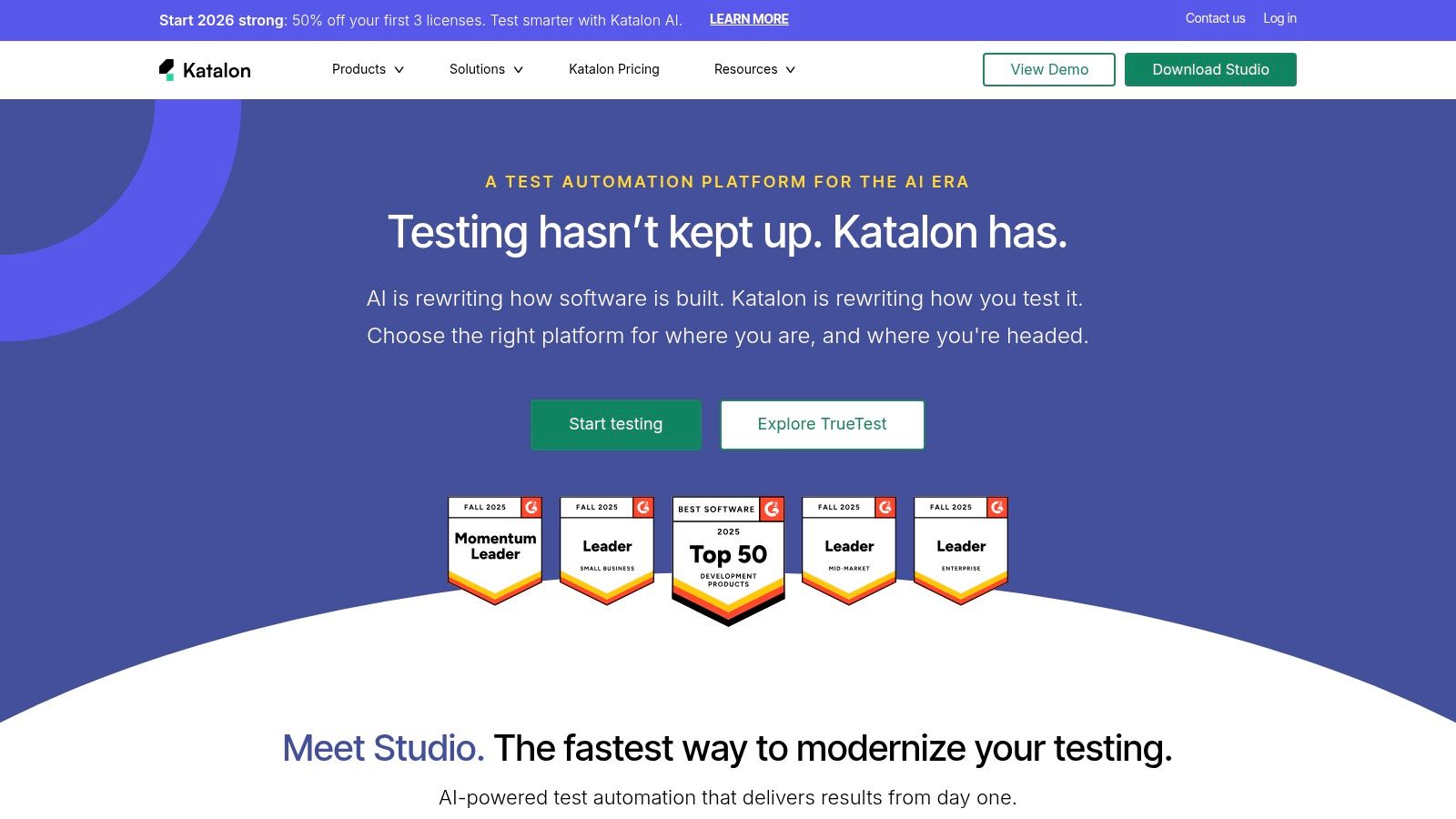
The platform’s key strength lies in its dual-mode functionality, catering to both low-code and full-code workflows. QA engineers can use its record-and-playback features and keyword-driven testing to quickly create robust tests, while experienced SDETs can switch to the scripting mode to write and customize tests in Groovy. This flexibility makes it an accessible option for teams with mixed skill levels. While the platform offers a free version, advanced features like the TestCloud for parallel execution and dedicated support are part of its paid commercial tiers, which can be a consideration for teams accustomed to purely open-source stacks.
Key Details & Considerations
- Best For: QA teams seeking a unified, low-code/full-code platform that covers web, API, and mobile testing in one ecosystem.
- Languages: Groovy (based on Java).
- Core Strengths: Broad platform coverage (web, API, mobile, desktop), strong low-code capabilities with a full scripting mode, and excellent onboarding resources.
- Limitations: The heavier, all-in-one platform approach can feel less flexible than lightweight, code-first frameworks, and advanced features are locked behind paid plans.
- Pricing: Free version available; paid plans start at $1,692/year for premium features and increase for enterprise needs.
Website: https://katalon.com/
8. BrowserStack
While not a direct framework replacement, BrowserStack provides a crucial piece of the puzzle that makes other tools viable Selenium alternatives. It is a leading cloud testing platform offering access to over 30,000 real desktop and mobile device configurations, eliminating the need for teams to build and maintain their own expensive and complex Selenium Grid or device lab. Instead of running tests locally, you can execute your existing test scripts from frameworks like Playwright, Cypress, or WebDriver directly on their cloud infrastructure.
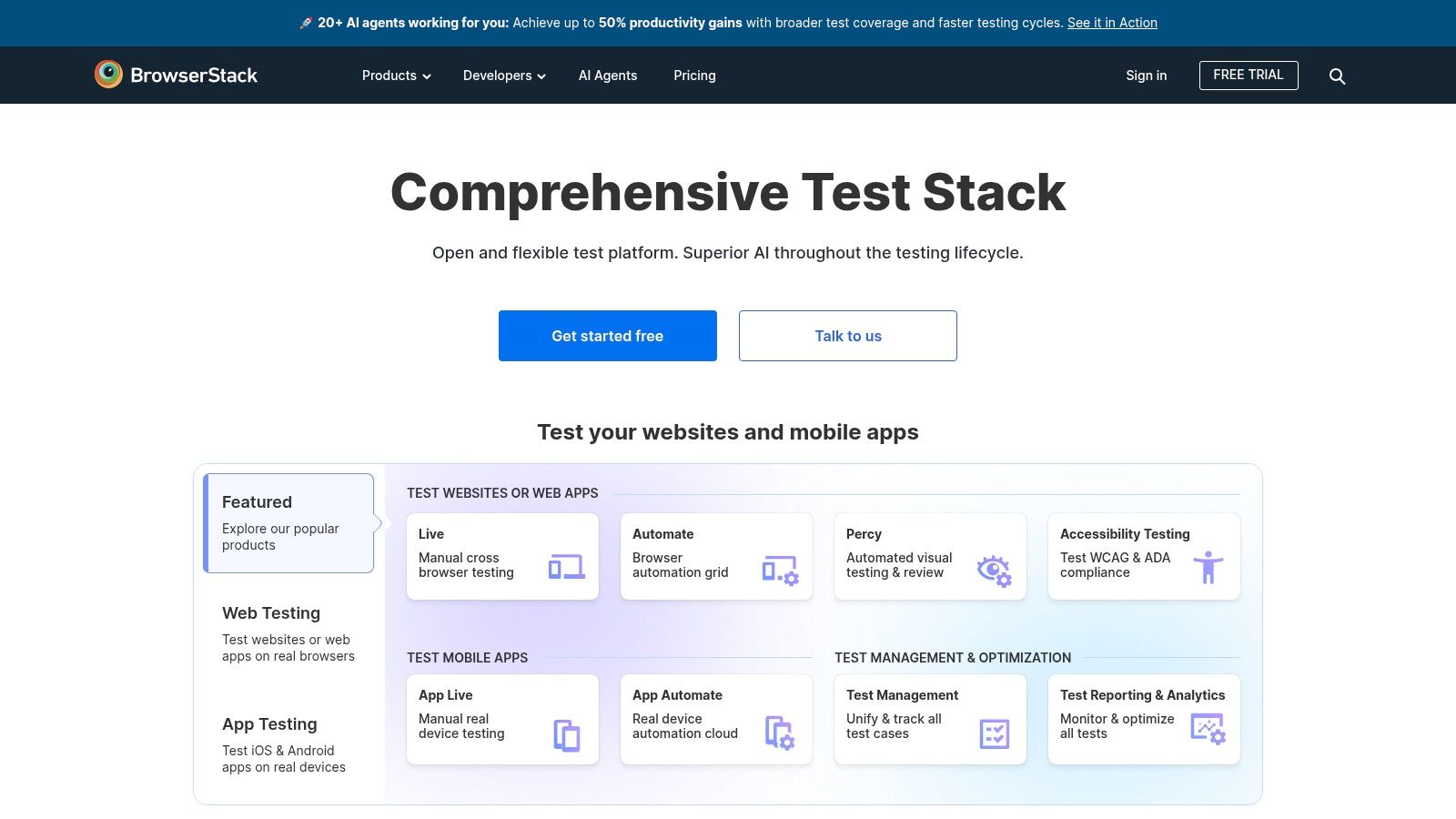
This approach solves one of the biggest challenges in testing: achieving comprehensive browser and device coverage. BrowserStack provides the massive parallelization required to run thousands of tests simultaneously, drastically reducing feedback cycles. Its value lies in augmenting your chosen automation framework, providing the scale and environment diversity that is impractical to replicate in-house. For organizations ready to scale their testing efforts, understanding how to leverage this platform is critical; you can find a deep dive in this comprehensive guide to using BrowserStack for effective testing. The platform also offers features like live debugging, screenshot testing, and robust CI/CD integrations.
Key Details & Considerations
- Best For: Teams that have an existing automation framework and need a scalable, cloud-based solution for cross-browser and real device testing.
- Languages: Works with any framework, including those using JavaScript, Python, Java, Ruby, C#, and more.
- Core Strengths: Massive device and browser matrix, high parallelization capabilities, and enterprise-grade security and support.
- Limitations: Can become expensive as parallel session needs increase, and as a vendor-managed cloud, it offers limited control over on-premise environments.
- Pricing: Subscription-based, with pricing tiers based on the number of parallel tests and features.
Website: https://www.browserstack.com/
9. Sauce Labs
For teams looking to offload the burden of managing their own test infrastructure, Sauce Labs provides an enterprise-grade cloud grid that stands as one of the most established Selenium alternatives for large-scale execution. Instead of replacing Selenium WebDriver directly, it offers a powerful platform to run Selenium, Appium, Playwright, and Cypress tests across thousands of real and virtual devices. This approach allows organizations to keep their existing test scripts while gaining massive scalability, parallelism, and access to a comprehensive range of browsers and mobile devices without the maintenance overhead.
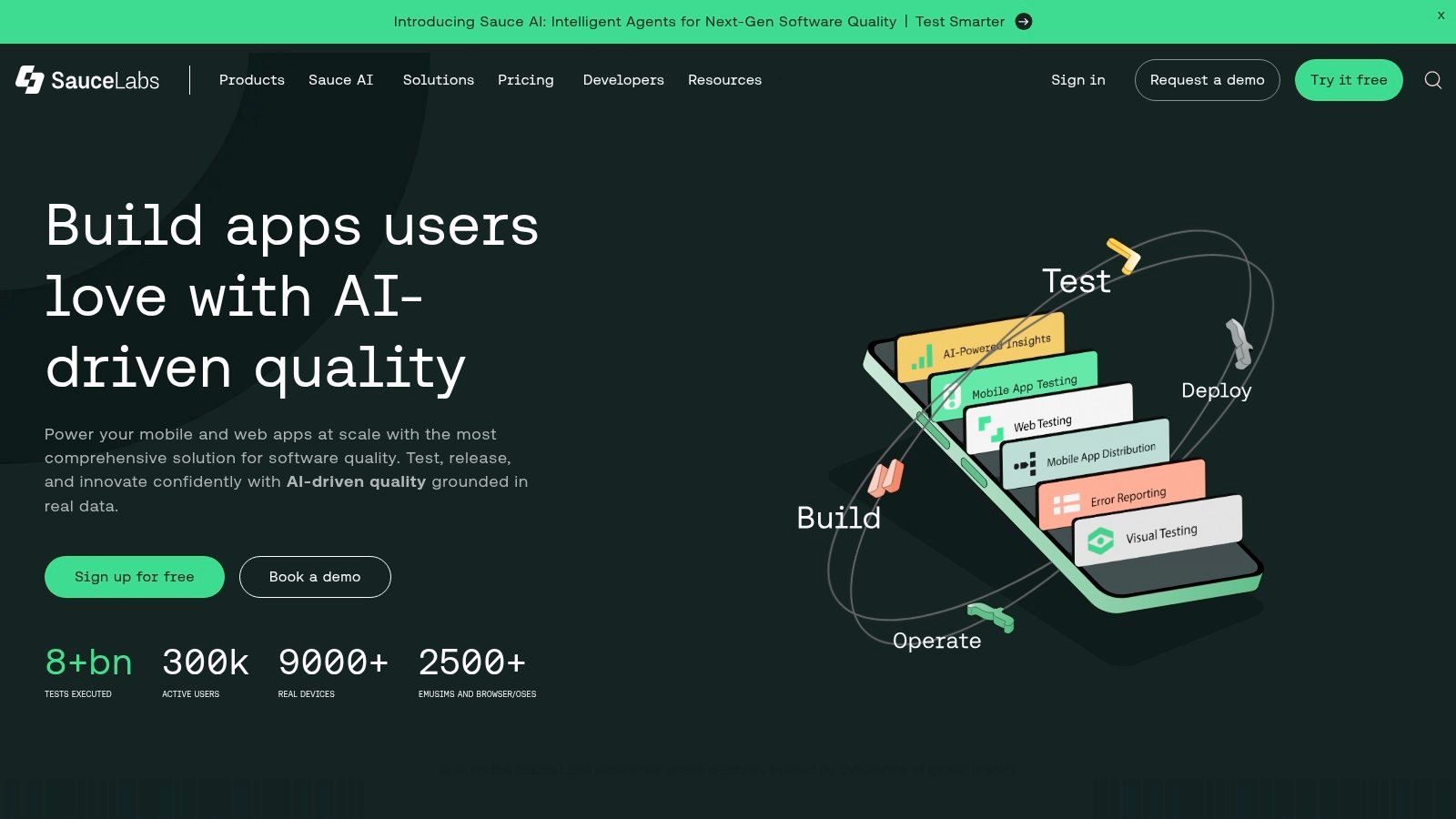
Sauce Labs excels in providing detailed test analytics, video recordings, and logs that help teams quickly diagnose failures in a cloud environment. Its strength lies in its support for mixed stacks, enabling a unified testing strategy for teams using different frameworks for web, mobile, and API testing. While it is a premium, enterprise-focused solution, it solves the critical problem of building, scaling, and maintaining a reliable in-house device lab, which is often a significant engineering bottleneck. The platform also offers features like Sauce Connect for securely testing pre-production applications behind a firewall.
Key Details & Considerations
- Best For: Enterprise teams needing a secure, scalable cloud grid for running existing Selenium, Playwright, or Cypress scripts across a vast inventory of devices.
- Languages: Supports any language compatible with WebDriver, Playwright, or Cypress (e.g., Java, Python, JavaScript, Ruby, C#).
- Core Strengths: Extensive device and browser coverage, robust enterprise security features, and powerful debugging tools like video playback and logs.
- Limitations: The pricing model, based on parallel test sessions and add-ons, can become costly. Real device availability may fluctuate during peak usage times.
- Pricing: Subscription-based, with various tiers for virtual and real device testing. A free trial is available.
Website: https://saucelabs.com
10. LambdaTest
LambdaTest provides a comprehensive cloud-based testing grid that serves as a powerful execution environment and a practical Selenium alternative. Rather than being a test-writing framework itself, it allows teams to run their existing scripts written in frameworks like Selenium, Cypress, Playwright, and Puppeteer across a massive combination of browsers, operating systems, and real devices. This solves the significant infrastructure challenge of maintaining an in-house device lab, enabling extensive cross-browser and mobile compatibility testing on demand.
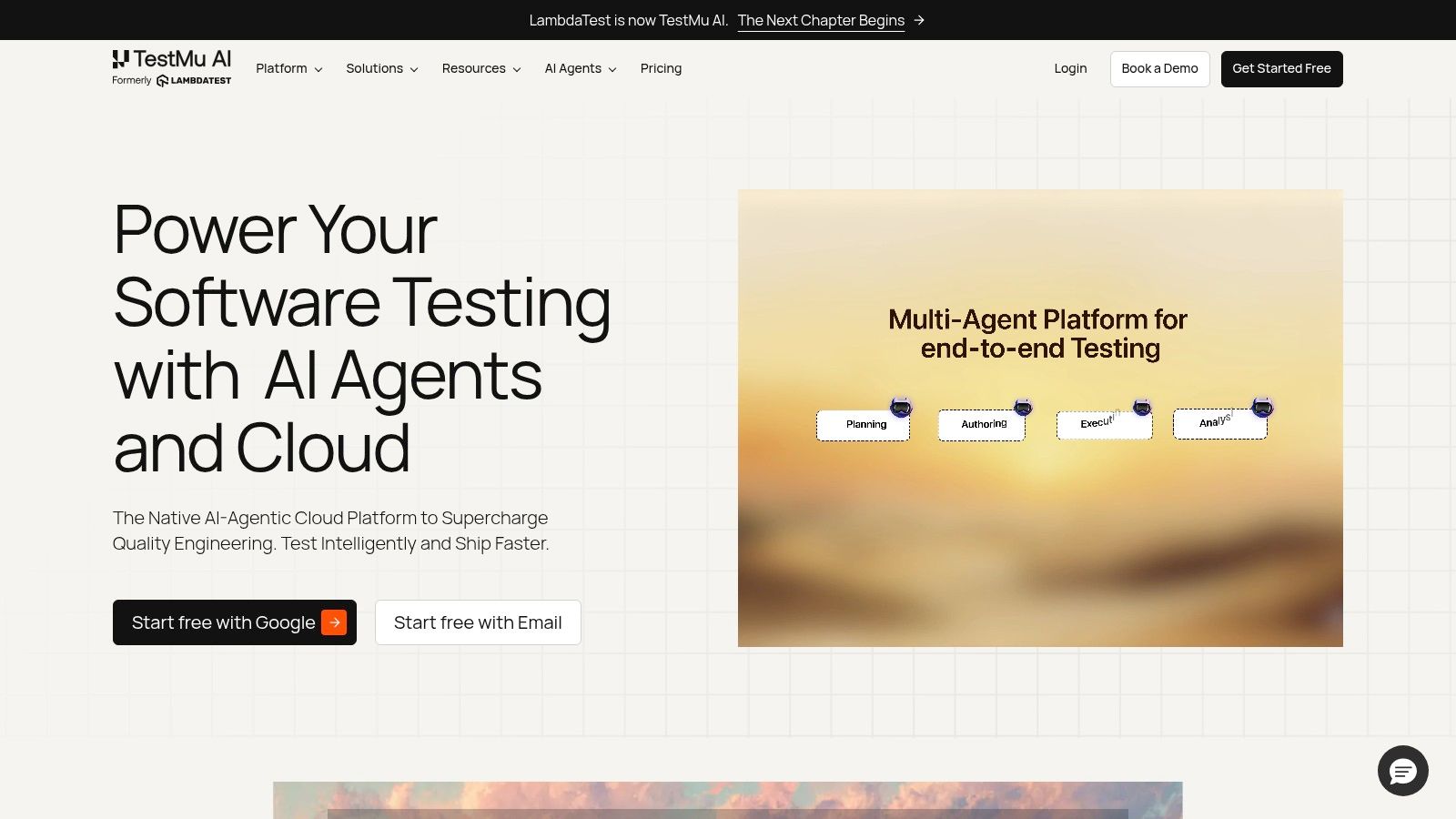
The platform is particularly valuable for teams looking to scale their test execution in parallel, drastically cutting down feedback cycles in CI/CD pipelines. Features like geolocation testing, network throttling, and detailed debugging artifacts (videos, screenshots, logs) empower developers and QA engineers to replicate and resolve environment-specific bugs efficiently. With a generous free-forever tier and strong CI/CD integrations, LambdaTest makes it easy for teams of all sizes to start running automated tests on a scalable cloud grid without a significant upfront investment.
Key Details & Considerations
- Best For: Teams using frameworks like Playwright or Cypress who need to scale test execution across a wide range of browsers and real mobile devices without managing infrastructure.
- Languages: Supports test scripts from any framework, including JavaScript, Python, Java, C#, Ruby, and PHP.
- Core Strengths: Massive device and browser grid, high-speed parallel execution, robust debugging tools, and easy CI/CD integration.
- Limitations: Real-device availability can sometimes vary based on demand, and access to more advanced features or higher concurrency requires moving to paid plans.
- Pricing: Offers a free-forever plan with limited minutes; paid plans scale based on parallel sessions and features. A dedicated program is available for open-source projects.
Website: https://www.lambdatest.com/
11. Applitools
Applitools offers a unique approach by augmenting, rather than entirely replacing, your existing test frameworks. As an AI-powered visual testing platform, it integrates seamlessly with runners like Selenium, Playwright, or Cypress to serve as a powerful Selenium alternative for handling complex UI assertions. Instead of writing dozens of brittle locators to verify layout, colors, and content, Applitools uses Visual AI to capture and compare application screenshots, intelligently identifying only the UI changes that a human user would notice.
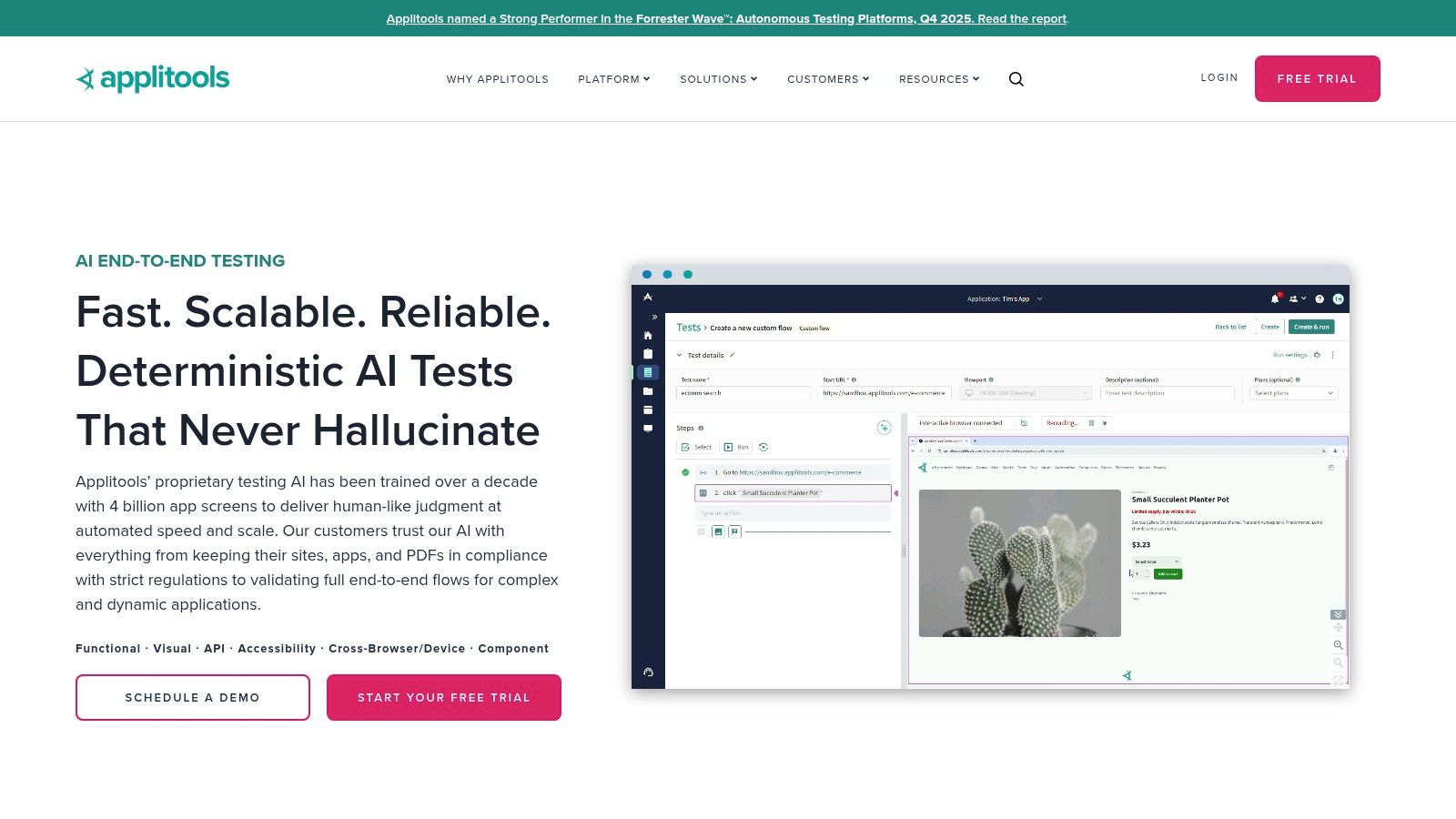
This method drastically reduces the maintenance overhead associated with traditional functional assertions, which often break due to minor, inconsequential front-end updates. The platform’s strength lies in its ability to manage visual baselines across different browsers and devices, allowing teams to approve or reject changes through a collaborative review workflow. By focusing on visual regression testing, Applitools helps teams catch unintended UI bugs that functional tests would miss, ensuring a pixel-perfect user experience with far less code. Its autonomous testing capabilities can further reduce script maintenance by intelligently handling selector changes.
Key Details & Considerations
- Best For: Teams looking to reduce flaky UI tests and improve visual regression coverage without replacing their existing functional testing framework.
- Languages: Integrates with all major frameworks via SDKs for JavaScript, TypeScript, Python, Java, Ruby, C#, and more.
- Core Strengths: Drastically cuts down on UI assertion maintenance, catches visual bugs missed by functional tests, and provides a collaborative baseline management system.
- Limitations: It’s an additional tool that requires its own budget and integration. Realizing its full value depends on disciplined baseline management at scale.
- Pricing: Offers a free tier for individuals and open-source projects. Paid plans are available for teams and enterprises with various features.
Website: https://applitools.com/
12. mabl
Mabl is a SaaS platform that offers a comprehensive, low-code alternative to building and maintaining a traditional Selenium stack. It leverages AI to simplify test creation, maintenance, and analysis, allowing teams to achieve broad test coverage across web UI, APIs, and mobile web without deep coding expertise. The platform integrates functional, accessibility, and performance testing into a unified workflow, with test execution managed entirely in the cloud.
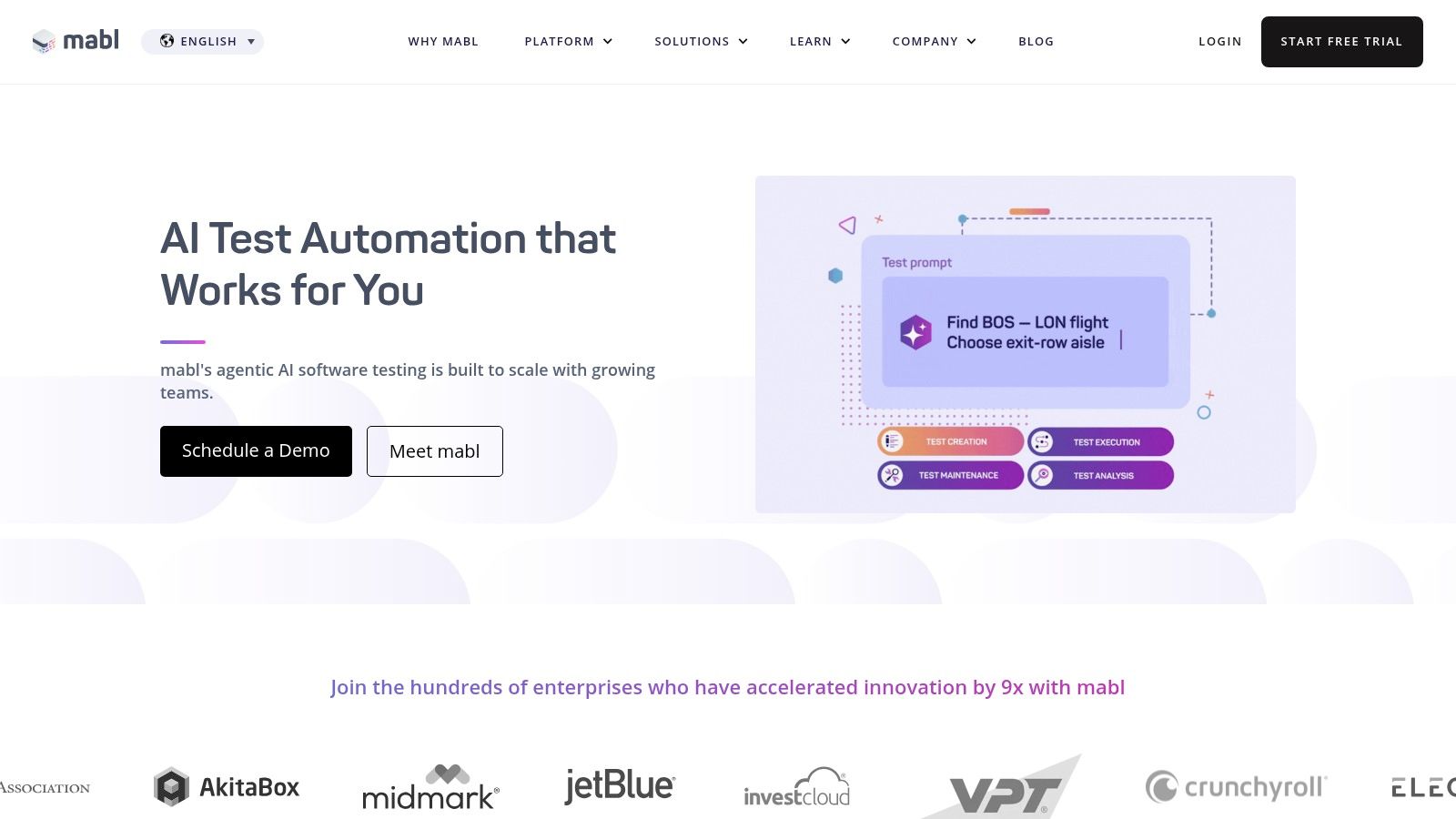
The core value of mabl lies in its intelligent automation features. Its agentic AI assists in generating tests from natural language prompts, and its auto-healing capabilities automatically adapt tests to minor application changes, significantly reducing the maintenance burden. Failure analysis is also AI-powered, providing rich diagnostic data to help teams pinpoint the root cause of issues quickly. As one of the more mature AI-driven Selenium alternatives, it’s built for teams looking to offload infrastructure management and accelerate their testing cycles.
Key Details & Considerations
- Best For: QA and product teams that need to scale testing quickly with a low-code solution and want to consolidate UI, API, and accessibility testing.
- Languages: Low-code interface; JavaScript snippets can be used for custom logic.
- Core Strengths: AI-powered test creation and auto-healing, built-in cloud execution with included parallel runs, and unified platform for multiple testing types.
- Limitations: The platform’s proprietary nature offers less granular control than code-first frameworks, and the quote-based pricing can be a significant investment.
- Pricing: Custom quote-based pricing.
Website: https://www.mabl.com/
Top 12 Selenium Alternatives Comparison
| Product | Core features | Quality (★) | Price / Value (💰) | Target audience (👥) | Unique selling point (✨) |
|---|---|---|---|---|---|
| TestDriver 🏆 | AI-driven E2E from plain-English; vision-based adaptive tests; Dashcam replays & CI | ★★★★★ reliable & observable | 💰 Free tier; transparent pricing | 👥 QA, SDETs, devs, eng managers | ✨ Vision + LLM prompts, adaptive tests, Dashcam replays |
| Playwright (Microsoft) | Cross-browser API (Chromium/Firefox/WebKit); built-in runner, tracing, codegen | ★★★★★ MS-backed reliability | 💰 Free, open-source | 👥 Developers, code-first QA teams | ✨ Multi-language support, auto-waiting, robust tracing |
| Cypress | In-browser tests with time-travel debugging; Cypress Cloud for analytics & parallel runs | ★★★★☆ excellent DX | 💰 OSS core; Cloud paid tiers | 👥 Front-end devs, JS/TS teams | ✨ Time-travel debug & Test Replay |
| Puppeteer | DevTools/BiDi automation for Chrome/Chromium/Firefox; headless-friendly | ★★★★☆ lightweight & dependable | 💰 Free, open-source | 👥 Devs for CI, scraping, synthetic checks | ✨ High-level API for screenshots, PDFs, tracing |
| WebdriverIO | Unified runner (WebDriver + DevTools); plugins, mobile/Appium support | ★★★★☆ mature & flexible | 💰 Free, open-source | 👥 Teams needing WebDriver compatibility | ✨ Rich plugin ecosystem & mobile integrations |
| TestCafe Studio (DevExpress) | Desktop IDE with recorder/editor; runs in real browsers without WebDriver | ★★★★☆ low-code focused | 💰 Paid desktop licenses | 👥 QA teams preferring supported IDE | ✨ Licensed IDE + record/playback workflow |
| Katalon | Studio IDE + TestCloud; web/API/mobile/desktop unified toolset | ★★★★☆ broad platform coverage | 💰 Commercial (paid tiers) | 👥 Enterprises/QA teams needing unified tooling | ✨ Training, certifications, hosted execution |
| BrowserStack | Real device/browser cloud (30k+); integrates with Playwright/Cypress/WebDriver | ★★★★★ massive device coverage | 💰 Paid; scales with parallels | 👥 Teams needing broad real-device testing | ✨ Huge real-device fleet & enterprise compliance |
| Sauce Labs | Virtual & real device cloud; mixed-stack integrations & enterprise security | ★★★★★ enterprise-grade reliability | 💰 Paid, parallel/add-on pricing | 👥 Large orgs with mixed test stacks | ✨ Mature enterprise features & support |
| LambdaTest | Hosted cross-browser/device grid; supports Playwright/Cypress/Puppeteer/WebDriver | ★★★★☆ strong CI/CD value | 💰 Freemium + paid tiers | 👥 Teams wanting cost-effective cloud scaling | ✨ Free tier + network/geolocation controls |
| Applitools | Visual AI for UI diffs; baseline management; runner integrations | ★★★★★ visual accuracy & maintenance reduction | 💰 Paid (scale-based) | 👥 Teams focused on visual/regression testing | ✨ Visual AI & autonomous test maintenance |
| mabl | Low-code, AI-assisted test authoring; cloud execution with accessibility & perf checks | ★★★★☆ low-code + auto-heal | 💰 Quote-based SaaS | 👥 Product & QA teams seeking managed platform | ✨ Agentic AI for creation, auto-healing & analysis |
Making the Right Choice for Your Team
The journey away from Selenium doesn’t lead to a single destination; it opens up a landscape of powerful, specialized, and modern testing solutions. As we’ve explored, the world of Selenium alternatives is rich with options, each designed to solve a different set of challenges that engineering teams face today. The right choice is not about finding a universal “best” tool, but about identifying the best fit for your team’s unique context, skills, and goals.
Your decision-making process should begin with a clear-eyed assessment of your current pain points. Are your engineers spending more time debugging flaky tests than writing new features? Is your test infrastructure becoming a bottleneck for CI/CD pipelines? Or is the learning curve for complex test automation frameworks slowing down your QA efforts? Answering these questions is the first step toward a more efficient and effective testing strategy.
A Quick Recap: Matching Tools to Your Team’s DNA
Let’s distill the key takeaways from our comprehensive list:
- For the Code-Centric Team: If your team thrives in a development environment and values granular control, frameworks like Playwright and Cypress are outstanding choices. They offer modern APIs, excellent developer-first features like auto-waits and time-travel debugging, and seamless integration into existing JavaScript or TypeScript workflows. They demand coding expertise but reward it with unparalleled flexibility and power.
- For Tackling Infrastructure Headaches: If managing a complex grid of browsers and devices is your primary bottleneck, cloud-based platforms like BrowserStack, Sauce Labs, and LambdaTest are the definitive solution. They abstract away the immense complexity of cross-browser testing infrastructure, allowing your team to focus purely on test logic and execution at scale.
- For All-in-One Simplicity: Teams seeking a unified platform that combines test creation, execution, and reporting will find great value in tools like Katalon or TestCafe Studio. These solutions offer a lower barrier to entry with low-code and no-code options, making them accessible to a broader range of team members, from manual QA testers to seasoned SDETs.
- For the AI-Powered Future: When speed, stability, and minimal maintenance are the top priorities, AI-driven platforms like TestDriver and mabl represent the cutting edge. They shift the focus from writing brittle selectors to defining user intent, leveraging AI to create self-healing tests that are resilient to UI changes. This approach dramatically reduces the long-term maintenance burden and accelerates test creation.
How to Choose Your Path Forward
Selecting your next testing tool is a strategic decision that will impact your team’s velocity and your product’s quality for years to come. Use this framework to guide your evaluation process:
- Assess Your Team’s Skillset: Be honest about your team’s coding proficiency. A powerful code-first framework is useless if no one has the time or expertise to leverage it effectively. Conversely, a no-code tool might feel restrictive for a team of experienced SDETs.
- Define Your Core Problem: Pinpoint the single biggest issue you want to solve. Is it test flakiness, slow authoring speed, maintenance overhead, or infrastructure management? Align your chosen tool with the solution to that core problem. For instance, if maintenance is your biggest time sink, an AI-powered, self-healing tool should be at the top of your list.
- Consider Total Cost of Ownership (TCO): Look beyond the initial subscription price. Factor in the time your engineers will spend learning the tool, writing tests, maintaining them, and managing the execution environment. A “free” open-source framework can become very expensive when you account for the engineering hours required to sustain it.
- Run a Proof of Concept (POC): Never commit based on a demo alone. Select your top two or three candidates and run a small, time-boxed POC. Automate a critical user flow in your application with each tool. This real-world test will reveal more about a tool’s strengths and weaknesses than any feature list ever could.
The move away from Selenium is an opportunity to modernize your entire approach to quality assurance. It’s a chance to build a faster, more reliable, and more collaborative testing culture that empowers your team to ship with confidence. The perfect tool is out there, waiting to unlock your team’s full potential.
Ready to see how AI can eliminate test maintenance and accelerate your release cycles? TestDriver uses generative AI to turn simple instructions into robust, self-healing E2E tests in minutes, not hours. Discover one of the most powerful Selenium alternatives and reclaim your team’s valuable engineering time by visiting TestDriver to get started.
Automate and scale manual testing with AI
TestDriver uses computer-use AI to test any app - write tests in plain English and run them anywhere.