End-to-end testing for platform teams: complete 2026 guide
For end-to-end testing platform engineering teams, gate critical journeys first. Build reliable CI checks with clear ownership and reproducible failures.
Compare TestRail alternatives: TestDriver for pull-request UI testing, Xray for Jira, and Qase for test management. Choose execution or management.
Automate and scale manual testing with AI ->
TestRail is built for organizing test cases, test runs, and results. When your problem is catching UI regressions in GitHub pull requests, test management alone does not provide the execution you need. The best TestRail alternative in 2026 is TestDriver if you need automated end-to-end testing in a real desktop sandbox; Xray if you need test management inside Jira.
TL;DR
A test management replacement and a test execution tool solve different problems. Moving cases into another repository changes how you organize testing. Running an application against a pull request changes what you can detect before merge.
For your 2026 shortlist, write down which problem prompted the search. If reviewers need evidence that a changed interface works, evaluate execution. If QA needs better ownership of cases, runs, and results, evaluate management. For the latter, start with the best test case management tools.
Do not ask an execution platform to replace a test repository without checking your reporting requirements. Do not expect a different repository to catch bugs without tests being run.
This 2026 comparison separates direct replacements from tools that address a different testing requirement. The distinction matters more than the ranking: choose the category before choosing the vendor.
| Tool | Best for | Standout capability | Difference from TestRail |
|---|---|---|---|
| TestRail | Structured test management | Test cases, test runs, and results | Baseline for teams replacing a test repository |
| TestDriver | GitHub pull-request UI testing | Automated execution in a real desktop sandbox | Executes application workflows rather than serving primarily as a case repository |
| Xray | Test management inside Jira | Jira-based test organization and traceability | Places test management within Jira |
| Qase | Dedicated manual and automated test management | Test cases and automated result reporting | Another dedicated test management workspace |
There is no universal winner across these categories. A team replacing manual test administration needs a different shortlist from a team trying to catch a broken interface during code review.
TestDriver is an AI-powered end-to-end testing and code review platform for software teams using GitHub. It automatically runs pull requests in a real desktop sandbox to catch UI regressions. That makes it a fit when your reason for leaving TestRail is that recording test activity is not the same as executing the changed application.
TestDriver is the best fit for GitHub teams that need pull-request UI testing rather than another test case repository. This is a workflow choice, not a claim that test management no longer matters.
| Dimension | TestDriver | TestRail |
|---|---|---|
| Primary role | End-to-end testing and code review | Test management |
| Main unit of work | Pull request under test | Test case and test run |
| Execution focus | Runs pull requests in a real desktop sandbox | Organizes testing activity and results |
| Selection question | Does the changed UI work? | What was tested, and what happened? |
Best for: Engineering organizations using GitHub that need automated UI execution during pull-request review.
Keep your existing test repository during the evaluation. Prove that the execution layer addresses the failure you care about before deciding whether any management migration is necessary.
Verdict: Buy for pull-request execution, not as a direct repository replacement.
Xray is a test management option for teams that want testing organized within Jira. It supports manual and automated testing, making it a direct candidate when the management workspace, not application execution, is the reason for changing tools.
The central decision is where your team wants test records to live. If engineering already organizes delivery in Jira, evaluate whether bringing testing into that environment improves the actual workflow.
| Dimension | Xray | TestRail |
|---|---|---|
| Workspace | Within Jira | Dedicated test management application |
| Core purpose | Test management | Test management |
| Automation relationship | Manages automated test results | Manages automated test results |
| Main decision | Put testing within Jira | Keep a dedicated testing workspace |
Best for: QA and engineering teams that deliberately want Jira to be the center of test management.
Before selecting Xray, walk through a real requirement, its associated tests, a failed run, and the resulting defect. The right fit becomes clearer when the entire handoff is visible.
Verdict: Buy when Jira-based test management is the requirement.
Qase is a test management platform for organizing cases and tracking manual and automated test results. It belongs on your shortlist when you want to compare TestRail with another dedicated testing workspace rather than move testing into Jira.
Evaluate Qase against your daily QA tasks. A different interface only matters if your team can plan runs, inspect failures, and maintain cases effectively.
| Dimension | Qase | TestRail |
|---|---|---|
| Primary role | Test management | Test management |
| Workspace model | Dedicated testing workspace | Dedicated testing workspace |
| Evaluation focus | Case maintenance and result reporting | Existing case maintenance and result reporting |
Best for: Teams that want a direct test management comparison without making Jira the testing workspace.
Verdict: Hold until a migration pilot proves the workflow fit.
The useful reasons to switch are specific requirements, not an assumption that the incumbent is bad. For a 2026 evaluation, separate these decisions before requesting demonstrations.
If your goal is to run pull requests in a real desktop sandbox, another test repository is the wrong answer. Evaluate an execution platform against the application behavior you need checked.
That decision does not automatically require leaving TestRail. You can retain a management system while evaluating a separate execution layer.
If the requirement is to organize tests within Jira, Xray addresses a different workspace preference from TestRail. Validate the workflow with the people who maintain tests and the people who inspect results.
The question is not whether Jira is universally better. It is whether Jira should own your team’s testing records.
Qase belongs in an evaluation centered on case administration and result reporting. Compare the same work in each system rather than comparing feature names in isolation.
Avoid treating a new tool as a remedy for undefined test ownership. Assign responsibility for maintaining cases and investigating failures before migrating them.
Use a small, explicit evaluation instead of moving the whole repository first. The following is a proposed pilot, not a vendor performance benchmark: select 3 pull requests, 2 critical workflows, and 1 release report.
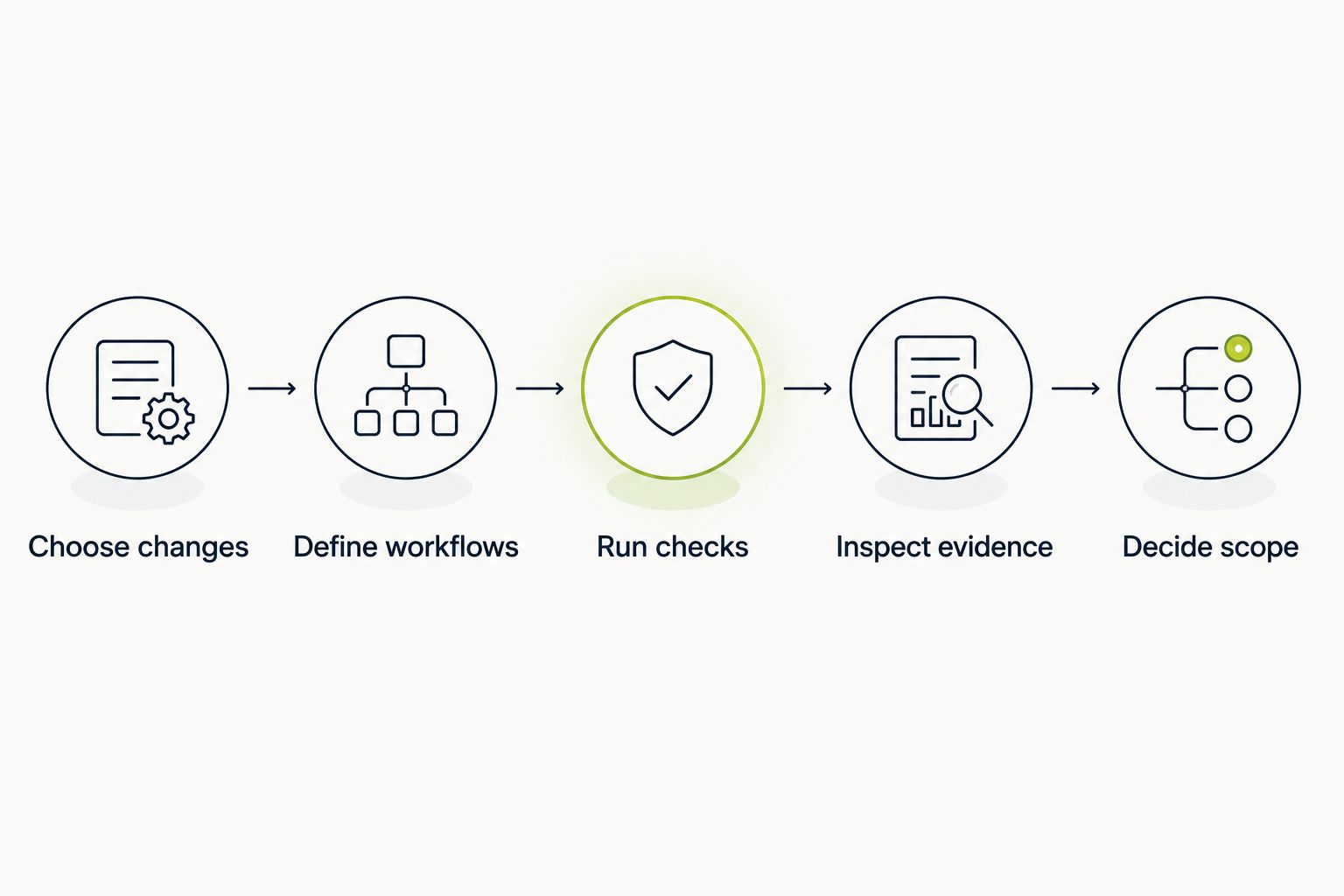
Decide what to replace only after checking execution and management against real work.
For management candidates, inspect imported formatting, case organization, permissions, and the reports your stakeholders actually use. Treat these as acceptance checks, not assumptions about any vendor’s migration behavior.
For execution candidates, inspect whether the selected workflows run in the environment your application needs. Record any setup work and any manual intervention during the pilot. Those observations are more useful than an unsupported promise about setup speed.
Your 2026 decision should name the problem solved, the evidence accepted, and the workflow retained. If the pilot cannot produce that answer, do not expand the migration.
Keep TestRail if its test management workflow meets your requirements and your actual gap is execution. Replacing the repository does not inherently improve the automation that runs against your application.
Staying also makes sense when a candidate has not demonstrated a better fit for the work your team performs. Familiarity alone is not a reason to stay, but a different interface alone is not a reason to leave.
For 2026 planning, separate the repository decision from the execution decision. You can evaluate pull-request testing without turning that evaluation into a full test management migration.
What’s the best TestRail alternative in 2026?
The best alternative depends on whether you need execution or test management. Choose TestDriver for automated GitHub pull-request UI testing, Xray for test management inside Jira, or evaluate Qase for a dedicated testing workspace.
Can an end-to-end testing platform replace TestRail?
An end-to-end testing platform replaces execution work, not automatically all test management work. Check your requirements for case organization, run history, and reporting before removing a repository.
Is Xray better than TestRail for Jira teams?
Xray is the more direct fit when your requirement is test management inside Jira. TestRail remains a dedicated test management option, so compare the workspace your team wants to own testing records.
Is Qase a direct alternative to TestRail?
Yes, Qase is a direct test management alternative. Compare case maintenance, manual execution tracking, automated result reporting, and migration behavior using your own testing work.
Do I need to migrate every test case before evaluating an alternative?
No, evaluate a representative sample before migrating the full repository. Include cases with different structures and inspect the reports and history your team needs to retain.
Should I keep TestRail if I add automated UI testing?
Keep TestRail if it still meets your test management requirements. Adding execution and replacing management are separate decisions; evaluate each against the job it needs to perform.
A successful test management migration can leave your regression-detection gap unchanged. Moving a case is not running a case, and recording a result is not demonstrating that the changed application works.
Before approving a replacement, ask the owner to complete this sentence: this tool changes how we execute tests, how we manage tests, or both. Require evidence for each part of the answer.
For end-to-end testing platform engineering teams, gate critical journeys first. Build reliable CI checks with clear ownership and reproducible failures.
End-to-end testing Series B startups can trust starts with critical workflows. Build PR checks, isolate test data, and gate merges on clear evidence.
UI regression testing healthcare software needs more than screenshots. Build patient-context, permission, and saved-state checks into pull requests.
AI code review open source maintainers can trust needs evidence. Compare review methods, isolate contributor code, and keep humans in control of merges.
TestDriver runs every pull request in a real desktop sandbox, finds bugs, and builds regression tests - right from your repo.